Pigment Yellow 139: Properties, Applications, and Buying Guide for Industrial Buyers
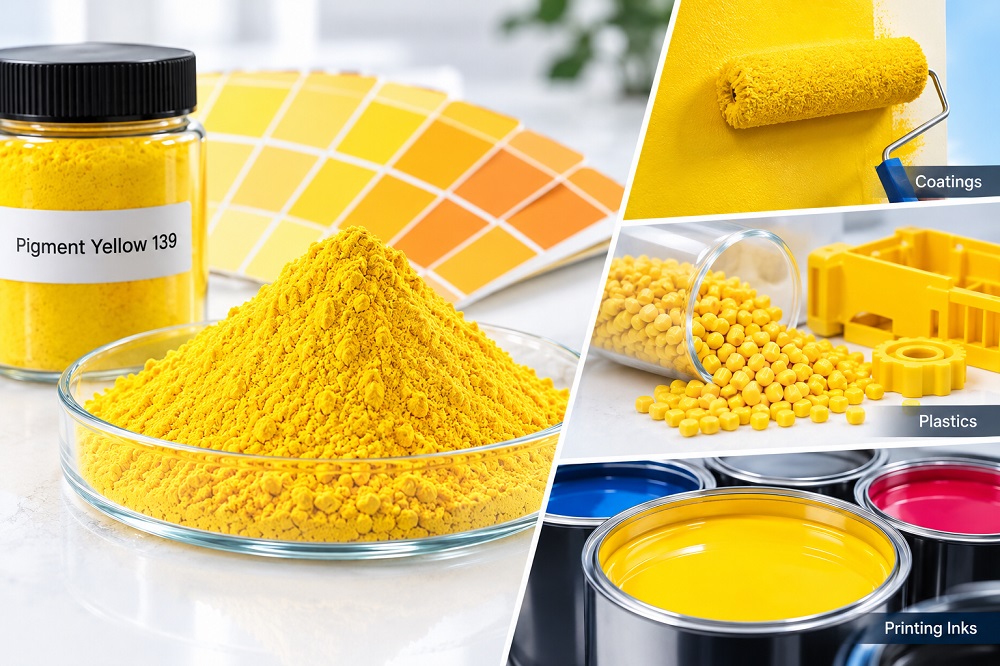
Choosing the right yellow pigment is essential for manufacturers that need consistent color, reliable processing performance, and long-term product quality. For companies producing industrial coatings, plastic components, printing inks, and other colored materials, Pigment Yellow 139 is an organic pigment worth considering when its color characteristics and technical performance match the intended application.
For international buyers, selecting a pigment involves more than comparing prices. Color strength, heat resistance, lightfastness, dispersion behavior, formulation compatibility, and supply consistency can all affect the performance of the finished product. Understanding these factors helps manufacturers make informed purchasing decisions and reduce the risks associated with introducing a new raw material.
This guide explains what Pigment Yellow 139 is, which properties buyers should evaluate, where it may be used, and how to select a suitable Pigment Yellow 139 manufacturer or supplier for long-term industrial production.
What Is Pigment Yellow 139?
Pigment Yellow 139, commonly abbreviated as PY139, is an organic yellow pigment belonging to the isoindoline family. It is used in industrial color formulations where a suitable yellow shade and specific performance characteristics are required.
Depending on the commercial grade and formulation, Pigment Yellow 139 may be evaluated for applications involving coatings, plastics, printing inks, and other specialty color systems. Its suitability depends on the required shade, processing conditions, exposure environment, and performance standards of the finished product.
For industrial buyers, it is important to distinguish between a pigment's general chemical classification and the actual performance of a particular commercial grade. Different grades, particle characteristics, and manufacturing processes can influence color development, dispersion, and application performance.
Key Properties of Pigment Yellow 139
Color Shade and Color Strength
Color shade and strength are fundamental considerations when selecting Pigment Yellow 139. Manufacturers need a pigment that can achieve the target color without creating unnecessary formulation adjustments or excessive material consumption.
When comparing suppliers, buyers should evaluate the pigment under consistent testing conditions and compare it against an approved color standard. Color development can vary with pigment concentration, dispersion quality, binder chemistry, and the other ingredients used in the formulation.
For large-scale manufacturing, a clear color specification and an agreed batch acceptance procedure can help maintain consistency between production runs.
Lightfastness and Weather Resistance
Lightfastness describes a pigment's resistance to color change caused by light exposure. Weather resistance is particularly important for products exposed to sunlight, moisture, and changing outdoor conditions.
Pigment Yellow 139 may be considered for applications where color durability is an important selection factor. However, the actual performance should be verified for the specific grade and finished formulation rather than assumed from the pigment name alone.
For outdoor coatings and other demanding applications, buyers should request relevant technical data and conduct appropriate exposure tests. Resin selection, pigment concentration, additives, and environmental conditions can all influence the final result.
Heat Resistance and Processing Stability
Heat resistance is a key factor for plastic manufacturers and other businesses using elevated processing temperatures. A pigment must remain suitable under the temperature, residence time, and mechanical conditions of the intended manufacturing process.
Before selecting Pigment Yellow 139 for a polymer application, buyers should confirm the recommended processing conditions with the supplier. Laboratory trials can help determine whether the grade maintains the desired shade and performance during processing.
Manufacturers should avoid relying on a single general heat-resistance value without checking the testing method and the specific conditions under which the value was obtained.
Dispersion and Formulation Compatibility
Good dispersion helps manufacturers achieve uniform color development and reduce visible defects in the finished material. Poor dispersion may contribute to uneven coloration, inconsistent appearance, or processing difficulties.
When evaluating Pigment Yellow 139, buyers should consider the intended binder, polymer, solvent system, additives, and production equipment. Testing the pigment in the actual formulation is the most reliable way to assess compatibility.
Industrial Applications of Pigment Yellow 139
Pigment Yellow 139 for Industrial Coatings
Coatings manufacturers must balance color requirements with durability, formulation stability, and production efficiency. Pigment Yellow 139 may be evaluated for suitable coating systems when its shade and performance characteristics meet the application's requirements.
Before approving a grade, formulators should assess color strength, dispersion, compatibility with the resin system, and the required resistance to light and weather exposure. Different coating technologies may require different testing procedures.
For buyers sourcing yellow pigments for industrial finishes, comparing technical documentation and testing samples in the intended coating system can help identify the most appropriate material.
Pigment Yellow 139 for Plastics and Polymer Coloring
Plastic manufacturers require pigments that can deliver the target color while remaining compatible with the polymer and processing method. Pigment Yellow 139 may be considered for selected plastic coloration applications after its thermal stability and processing behavior have been verified.
Important evaluation factors include polymer type, processing temperature, pigment loading, dispersion quality, and interactions with stabilizers or other additives. Trial production can help determine whether the pigment meets the required appearance and manufacturing standards.
For injection molding, extrusion, and other polymer processes, buyers should request application-specific recommendations instead of assuming that one grade will perform equally well in every resin system.
Pigment Yellow 139 for Printing Inks
Printing ink manufacturers evaluate pigments based on color strength, dispersion, compatibility with the ink vehicle, and the performance requirements of the printed material.
Pigment Yellow 139 may be assessed for selected ink formulations where its color characteristics and technical properties are appropriate. The evaluation should consider printing technology, substrate, required transparency or opacity, drying conditions, and light exposure.
Before moving to commercial production, ink formulators should verify that the pigment can meet the target color and processing requirements under their own manufacturing conditions.
Specialty Industrial Color Applications
Beyond conventional coatings, plastics, and inks, manufacturers may investigate Pigment Yellow 139 for specialty formulations that require a particular yellow shade and defined performance characteristics.
In these applications, pigment selection should be based on the end product's technical requirements, applicable regulations, and total formulation cost. Suppliers can help buyers determine whether an available grade is suitable for a specific development project.
Pigment Yellow 139 vs. Other Yellow Pigments
Not all yellow pigments offer the same balance of color, durability, processing stability, and cost. When comparing Pigment Yellow 139 with other organic yellow pigments, buyers should focus on the actual requirements of their products rather than selecting a material based on color name alone.
For example, Pigment Yellow 110 and Pigment Yellow 139 belong to different pigment families and may offer different color characteristics and application performance. The preferred choice depends on the target shade, processing conditions, durability requirements, and formulation compatibility.
A practical comparison should include the following factors:
- Target yellow shade and color strength.
- Lightfastness and weather resistance requirements.
- Heat resistance for the intended manufacturing process.
- Dispersion behavior and compatibility with the formulation.
- Regulatory requirements for the destination market and end use.
- Required dosage, overall formulation cost, and supply availability.
Requesting samples of suitable alternatives and testing them under identical conditions can provide a more meaningful comparison than relying on general product descriptions.
How to Select the Right Pigment Yellow 139 Supplier
Review Technical Documentation
A professional pigment supplier should be able to provide the relevant technical data sheet (TDS) and safety data sheet (SDS) for the proposed grade. Depending on the application, buyers may also need test reports, compliance documentation, and information about recommended processing conditions.
Check that the data corresponds to the actual product being offered. If a particular performance value is essential, confirm the test method and conditions before including it in the purchasing specification.
Evaluate Batch Consistency and Quality Control
Batch consistency is especially important for manufacturers that produce the same color repeatedly. Variations in shade or strength may require adjustments to the formulation and can increase production costs.
Ask potential suppliers about their quality-control procedures, batch identification, inspection records, and process for handling product deviations. For recurring orders, establish an approved reference sample and clearly defined acceptance criteria.
Request Samples Before Bulk Orders
Testing a sample allows buyers to assess color development, dispersion, and compatibility with the intended formulation before committing to commercial quantities.
Whenever possible, test the pigment under representative production conditions. A successful laboratory evaluation should be followed by an appropriate production trial when the application or order size makes further validation necessary.
Compare Pricing and Supply Capability
Price is an important purchasing factor, but the lowest quoted price does not necessarily result in the lowest total production cost. Required dosage, quality consistency, processing efficiency, shipping expenses, and delivery reliability can all affect the overall value of a pigment purchase.
International buyers should compare minimum order quantities, packaging, lead times, payment terms, export documentation, and the supplier's ability to support repeat orders. These factors are particularly relevant for distributors and manufacturers planning long-term procurement.
Common Mistakes to Avoid When Buying Pigment Yellow 139
One common mistake is choosing a pigment based only on its name or advertised color. The same general pigment designation does not replace grade-specific technical data or application testing.
Another mistake is overlooking the effect of the formulation. A pigment that performs well in one resin, polymer, or ink system may require adjustments or further testing in another.
Buyers should also avoid comparing technical values without checking whether they were measured using the same test methods. Finally, relying exclusively on the initial unit price can lead to unexpected costs if the material causes inconsistent color or processing difficulties.
Defining clear specifications, testing samples, and agreeing on quality requirements before bulk purchasing can help reduce these risks.
Frequently Asked Questions About Pigment Yellow 139
What is Pigment Yellow 139 used for?
Pigment Yellow 139 is an organic yellow pigment that may be evaluated for suitable industrial applications, including selected coatings, plastics, printing inks, and specialty color formulations. Its suitability depends on the grade and the requirements of the final product.
Is Pigment Yellow 139 suitable for plastics?
It may be suitable for selected plastic applications, provided that the grade meets the polymer's processing temperature, dispersion, color, and durability requirements. Buyers should confirm technical specifications and test samples before production.
How do I evaluate Pigment Yellow 139 quality?
Review the TDS and SDS, request relevant performance data, test samples in the intended formulation, and assess batch consistency. For ongoing production, establish a reference color standard and an agreed quality-control process.
What should I ask a Pigment Yellow 139 manufacturer?
Ask about the available grade, target shade, technical specifications, application recommendations, sample availability, minimum order quantity, packaging, lead time, and export documentation. Provide your intended application and required performance standards to receive a more relevant recommendation.
Can I request a sample before placing a bulk order?
Sample availability depends on the supplier. Contact the manufacturer with your application details and estimated purchasing quantity to discuss sample arrangements, technical documents, and quotation terms.
Find a Suitable Pigment Yellow 139 Supplier for Your Business
Selecting the right Pigment Yellow 139 grade requires a clear understanding of the desired color, processing conditions, durability requirements, and formulation compatibility. A structured evaluation process can help manufacturers and distributors reduce sourcing risks and maintain consistent product quality.
If you are sourcing Pigment Yellow 139 for coatings, plastics, printing inks, or other industrial applications, contact our team to discuss your requirements. Share your target application, technical specifications, and estimated order quantity to request product information, sample availability, and a quotation.
We welcome inquiries from international pigment distributors, industrial manufacturers, and businesses seeking a dependable supply partner for their yellow pigment requirements.
ផលិតផលដែលពាក់ព័ន្ធ
 Pigment Yellow 110: Properties, Applications, and Buying Guide for Industrial Manufacturers
- សារធាតុពណ៌លឿង ៩៧៖ លក្ខណៈសម្បត្តិ កម្មវិធី និងការណែនាំបច្ចេកទេស
- Pigment Red 177 Buying Guide: Everything Importers Need to Know Before Purchasing
- ទិន្នន័យបច្ចេកទេសពណ៌ក្រហម ១៧៧៖ ធន់នឹងកំដៅ ភាពធន់ពន្លឺ និងស្ថេរភាពគីមី
- សារធាតុពណ៌ក្រហម 146៖ លក្ខណៈសម្បត្តិ កម្មវិធី និងការណែនាំបច្ចេកទេស
- សារធាតុពណ៌ក្រហម ១៧៧ ទល់នឹង សារធាតុពណ៌ក្រហម ១៧០៖ តើអ្នកគួរជ្រើសរើសសារធាតុពណ៌ក្រហមសរីរាង្គមួយណា?
- តើសារធាតុពណ៌ក្រហម 146 ជាអ្វី ហើយវាត្រូវបានប្រើនៅឯណា?
- របៀបជ្រើសរើសសារធាតុពណ៌លឿង 97 ដែលត្រឹមត្រូវសម្រាប់ផ្លាស្ទិច ថ្នាំកូត និងទឹកថ្នាំ
- តើសារធាតុពណ៌ក្រហម 177 ជាអ្វី? ការពន្យល់អំពីលក្ខណៈសម្បត្តិ កម្មវិធី និងអត្ថប្រយោជន៍
- របៀបជ្រើសរើសសារធាតុពណ៌ក្រហមដែលអាចទុកចិត្តបាន 177 ក្រុមហ៊ុនផលិតនៅប្រទេសចិន