Pigment Yellow 110: Properties, Applications, and Buying Guide for Industrial Manufacturers
Choosing the right yellow pigment is an important decision for manufacturers seeking consistent color quality, reliable processing performance, and long-term product durability. In applications where color stability and technical performance are essential, Pigment Yellow 110 is a pigment worth evaluating for suitable industrial formulations.
For coatings producers, plastics manufacturers, ink formulators, and international pigment distributors, understanding the characteristics of Pigment Yellow 110 can help simplify material selection and supplier evaluation. Beyond the initial color appearance, buyers should consider compatibility with the production process, required performance standards, batch consistency, and total procurement cost.
This guide explores the key characteristics of Pigment Yellow 110, its potential industrial applications, and the factors international buyers should review when sourcing it from a pigment manufacturer or supplier.
What Is Pigment Yellow 110?
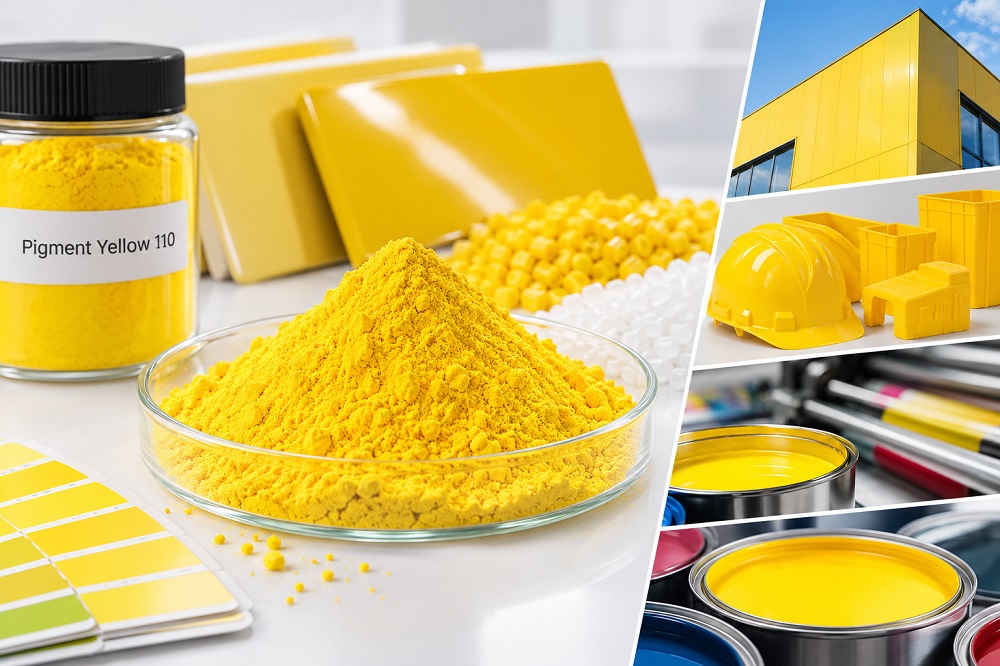
Pigment Yellow 110, commonly abbreviated as PY110, is an organic yellow pigment belonging to the isoindolinone pigment family. It is used in selected industrial color formulations where manufacturers require a bright yellow shade combined with appropriate technical performance.
Compared with conventional yellow pigments, high-performance organic pigments are often evaluated for their color strength, heat resistance, lightfastness, weathering behavior, and suitability for demanding applications. However, actual performance depends on pigment grade, particle characteristics, formulation, processing conditions, and the requirements of the final product.
For industrial buyers, the designation Pigment Yellow 110 is a starting point rather than a complete specification. Different commercial grades may have different performance profiles, so technical data should always be reviewed before making a purchasing decision.
Key Properties of Pigment Yellow 110
Color Strength and Shade Consistency
Color strength and shade consistency are important considerations for manufacturers producing coatings, plastics, and printing inks. Variations in pigment concentration, dispersion quality, or raw material characteristics can affect the final color.
When evaluating Pigment Yellow 110, buyers should request color data and sample materials to determine whether the shade matches their formulation requirements. For high-volume production, consistent color between batches is especially important because it helps reduce adjustment time and material waste.
Lightfastness and Weather Resistance
For products exposed to sunlight or outdoor environments, resistance to fading and weather-related color changes can influence the service life of the finished material. Pigment Yellow 110 may be considered for applications requiring good color durability, subject to the specifications of the selected grade.
Actual lightfastness and weather resistance should be confirmed through supplier technical documentation and application-specific testing. Factors such as pigment concentration, binder chemistry, exposure conditions, and the presence of other formulation ingredients can influence the final result.
Heat Resistance and Processing Compatibility
Heat resistance is an important selection criterion for plastic compounding, polymer processing, and other industrial manufacturing operations. Processing temperatures, residence time, polymer type, and shear conditions may affect pigment performance.
Before using Pigment Yellow 110 in a new production process, manufacturers should verify the recommended processing temperature range and test the pigment under their actual operating conditions. This is particularly important for applications involving high-temperature processing or demanding polymer systems.
Chemical Resistance and Formulation Stability
Some industrial products require pigments that maintain their appearance when exposed to specific chemicals, additives, or environmental conditions. Chemical resistance is therefore another factor to consider when evaluating Pigment Yellow 110.
Rather than relying on general pigment classifications alone, buyers should request application-relevant resistance data and conduct compatibility tests using the intended binder, additives, and production process.
Industrial Applications of Pigment Yellow 110
Pigment Yellow 110 for Industrial Coatings
Coatings manufacturers evaluate yellow pigments according to color requirements, durability expectations, formulation compatibility, and production efficiency. Pigment Yellow 110 may be suitable for selected industrial coating formulations where its shade and performance characteristics meet the technical requirements.
Before selecting a grade, coating formulators should assess dispersion behavior, color development, compatibility with the resin system, and the required level of light and weather resistance. Outdoor coatings and high-performance industrial finishes may require additional testing under simulated or actual service conditions.
Pigment Yellow 110 for Plastics and Polymer Applications
In plastics manufacturing, pigment selection affects final appearance, processing reliability, and product quality. Pigment Yellow 110 can be evaluated for suitable plastic coloration applications when its thermal stability, dispersion characteristics, and compatibility meet the requirements of the selected polymer.
Plastic manufacturers should consider the processing temperature, polymer type, pigment loading, and potential interactions with stabilizers or other additives. Laboratory trials and small-scale production tests can help confirm whether the selected grade delivers the required color and processing performance.
Pigment Yellow 110 for Printing Inks
Printing ink producers need pigments that provide suitable color strength, dispersion, and compatibility with the intended ink system. Depending on the grade and formulation, Pigment Yellow 110 may be evaluated for selected printing ink applications.
Important factors include particle dispersion, viscosity behavior, transparency or opacity requirements, substrate compatibility, and resistance to light or environmental exposure. Buyers should confirm suitability for the specific printing technology and end-use requirements before approving a pigment for commercial production.
Other Specialty Color Applications
Specialty color manufacturers may also evaluate Pigment Yellow 110 for other industrial formulations that require a particular yellow shade and a defined performance profile. Suitability depends on the application, technical specifications, regulatory requirements, and cost-performance expectations.
For specialized projects, working directly with an experienced pigment supplier can help buyers identify the appropriate grade and obtain the technical information needed for formulation development.
How to Choose the Right Pigment Yellow 110 Grade
Define Your Application Requirements
The first step is to identify the final application and the conditions the colored product will experience. A pigment intended for indoor plastic components may require a different performance balance from one used in outdoor coatings or printing inks.
Prepare a clear specification covering the required shade, color strength, processing conditions, durability expectations, and any applicable industry or customer standards. This information helps suppliers recommend a suitable grade instead of relying on a generic product description.
Review Technical Data and Test Results
Request the technical data sheet (TDS) and safety data sheet (SDS) for the proposed Pigment Yellow 110 grade. Depending on the application, relevant information may include heat resistance, lightfastness, weather resistance, chemical resistance, dispersion properties, and recommended processing conditions.
When specific performance values are essential, confirm the test method and conditions used to generate the data. Results obtained under different testing conditions may not be directly comparable.
Evaluate Sample Performance Before Bulk Purchasing
Sample testing is an important step in industrial pigment procurement. A laboratory trial allows manufacturers to check color development, compatibility, dispersion, and processing behavior before committing to a larger order.
For repeat production, buyers should also establish an approved color standard and agree on the relevant quality-control criteria with the supplier. This can help improve consistency across future shipments.
Compare Total Procurement Cost
The lowest price per kilogram does not always represent the best purchasing value. Pigment performance, required dosage, dispersion efficiency, production yield, quality consistency, and delivery reliability can all influence the overall cost.
International buyers should compare suppliers based on technical suitability, documented quality standards, commercial terms, packaging, lead time, and communication efficiency. A supplier that consistently meets the required specifications can help reduce avoidable production problems and sourcing risks.
What to Look for in a Pigment Yellow 110 Manufacturer
Selecting a suitable Pigment Yellow 110 supplier involves more than confirming product availability. Buyers should evaluate the manufacturer's technical capabilities, quality-control procedures, export experience, and ability to support long-term purchasing requirements.
Consistent Quality Control
Ask how the supplier controls product specifications between batches and whether inspection records or relevant test reports are available. Clear quality requirements and a documented approval process are particularly valuable for manufacturers that use the same pigment in recurring production runs.
Technical Support and Application Communication
A capable supplier should be able to provide product documentation, answer technical questions, and communicate clearly about application suitability. For complex formulations, timely technical support can help shorten evaluation cycles and reduce unnecessary trial costs.
Reliable Supply and Export Coordination
For distributors and industrial manufacturers, reliable supply is an important part of supplier selection. Confirm minimum order quantities, available packaging options, production lead times, shipping arrangements, and procedures for handling quality concerns.
Importers should also confirm the documentation required for their destination market and intended application before placing a commercial order.
Frequently Asked Questions About Pigment Yellow 110
What is Pigment Yellow 110 used for?
Pigment Yellow 110 is an organic yellow pigment that can be evaluated for suitable industrial applications, including selected coatings, plastics, and printing ink formulations. The appropriate use depends on the commercial grade and the performance requirements of the finished product.
Is Pigment Yellow 110 suitable for high-temperature plastic processing?
Suitability depends on the grade, polymer, processing temperature, and production conditions. Buyers should obtain the supplier's technical data and conduct application-specific tests before using it in high-temperature plastic processing.
How can buyers evaluate the quality of Pigment Yellow 110?
Buyers can review the TDS and SDS, compare relevant performance data, test samples in their own formulations, and assess batch-to-batch consistency. A clear specification and an agreed quality-control process are recommended for repeat orders.
What information should be included in a Pigment Yellow 110 inquiry?
A useful inquiry should include the intended application, required shade, expected performance, processing conditions, estimated order quantity, packaging preferences, and destination market. Sharing these details helps the supplier evaluate the request and provide a more relevant quotation.
How can I request a Pigment Yellow 110 sample or quotation?
Contact a pigment supplier with your application details and purchasing requirements. Ask for the available grade, technical documentation, sample availability, minimum order quantity, packaging options, lead time, and quotation terms before proceeding with bulk purchasing.
Source Pigment Yellow 110 for Your Industrial Applications
Choosing the right Pigment Yellow 110 grade requires a balance of color performance, processing compatibility, durability, quality consistency, and purchasing cost. By defining application requirements clearly and validating samples before production, manufacturers and distributors can make more informed sourcing decisions.
If you are looking for a Pigment Yellow 110 supplier for coatings, plastics, printing inks, or other industrial color applications, contact our team to discuss your requirements. Share your target application, technical specifications, and estimated order quantity to request product information, sample availability, and a quotation.
We welcome inquiries from international pigment distributors, industrial manufacturers, and buyers seeking a reliable long-term supply partner.
ផលិតផលដែលពាក់ព័ន្ធ
 Pigment Red 177 Buying Guide: Everything Importers Need to Know Before Purchasing
- របៀបជ្រើសរើសសារធាតុពណ៌ក្រហមដែលអាចទុកចិត្តបាន 177 ក្រុមហ៊ុនផលិតនៅប្រទេសចិន
- សារធាតុពណ៌ក្រហម ១៧៧ ទល់នឹង សារធាតុពណ៌ក្រហម ១៧០៖ តើអ្នកគួរជ្រើសរើសសារធាតុពណ៌ក្រហមសរីរាង្គមួយណា?
- សារធាតុពណ៌លឿង ៩៧៖ លក្ខណៈសម្បត្តិ កម្មវិធី និងការណែនាំបច្ចេកទេស
- ទិន្នន័យបច្ចេកទេសពណ៌ក្រហម ១៧៧៖ ធន់នឹងកំដៅ ភាពធន់ពន្លឺ និងស្ថេរភាពគីមី
- សារធាតុពណ៌ក្រហម 146៖ លក្ខណៈសម្បត្តិ កម្មវិធី និងការណែនាំបច្ចេកទេស
- ហេតុអ្វីបានជា Pigment Red 177 គឺល្អសម្រាប់ការផលិតពណ៌ផ្លាស្ទិច និង Masterbatch
- តើសារធាតុពណ៌ក្រហម 177 ជាអ្វី? ការពន្យល់អំពីលក្ខណៈសម្បត្តិ កម្មវិធី និងអត្ថប្រយោជន៍
- សារធាតុពណ៌ក្រហម ១៧៧ សម្រាប់ថ្នាំកូតឧស្សាហកម្ម៖ ហេតុអ្វីបានជាវាជាសារធាតុពណ៌ក្រហមដែលមានប្រសិទ្ធភាពខ្ពស់ដែលពេញចិត្ត
- តើសារធាតុពណ៌ក្រហម 146 ជាអ្វី ហើយវាត្រូវបានប្រើនៅឯណា?